
999 Bullion vs. 916 (22K) vs. 750 (18K) Gold: Decoding Making Charges, Wastage & Resale Spreads
Precision breakdown of 999 (24K), 916 (22K), and 750 (18K) gold fineness, jewelry making and wastage formulas, stone-weight deductions, and net resale recovery.

999 vs. 916 vs. 750 Gold: Fineness Standards and Alloy Metallurgy
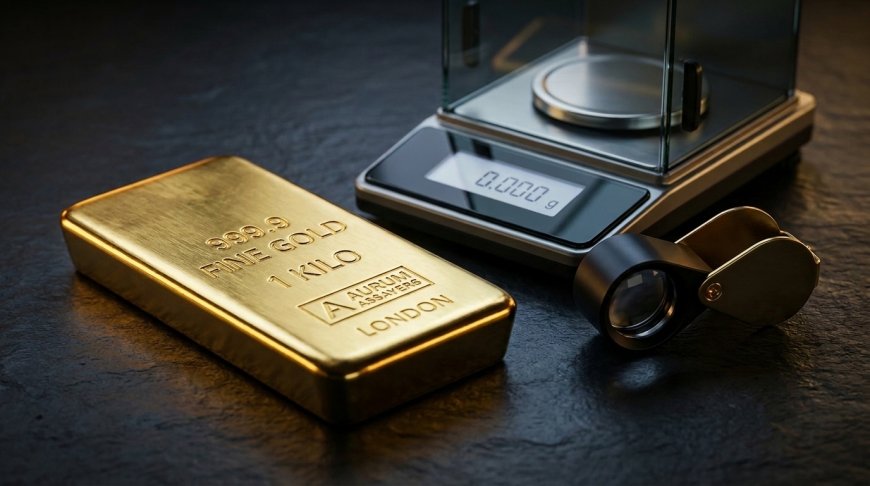
The numbers 999, 916, and 750 indicate gold purity in parts per thousand (millesimal fineness). 999 gold (24K) is 99.9% pure bullion, 916 gold (22K) contains 91.67% gold alloyed for jewelry durability, and 750 gold (18K) contains 75.0% pure gold blended with copper, silver, or palladium.
While retail buyers often treat karat labels as simple price tiers, bullion dealers and assay laboratories price every transaction strictly on fine gold mass. Pure 24-karat gold (999 or 999.9 fineness) is too malleable for intricate prong settings or daily-wear bangles; alloying pure gold with harder base metals transforms its Vickers hardness and tensile strength while proportionally diluting its intrinsic melt value.
To calculate the exact intrinsic metal rate of any karat standard from the live 24K spot benchmark, apply the millesimal fineness formula:
R_karat = R_24k * (K / 24) = R_24k * (Fineness / 1000)
For example, when 24K gold trades at $120.00 per gram (or PKR 33,200/gram), 22K (916) metal carries an intrinsic value of $120.00 * 0.9167 = $110.00/g, 21K (875) equals $105.00/g, and 18K (750) equals $90.00/g. Any retail price exceeding these mathematical baselines represents fabrication labor, retailer markup, wastage, or indirect taxation.
Live 24K / 22K / 18K Bullion Purity Benchmark
Adjust the interactive sliders and parameters below to calculate real-time figures for this scenario:
The Jewelry Invoice Equation: Making Charges, Wastage & Stone Deductions
Unlike investment bullion bars—which trade at tight dealer premiums of 1.5% to 4.0% over spot—retail jewelry invoices embed non-recoverable fabrication costs. Across South Asian (Pakistan, India) and Middle Eastern (Dubai, Riyadh) gold markets, jewelers calculate final retail billing using two distinct surcharges: Making Charges (artisan labor) and Wastage / Taka (unrecoverable filing and melting loss during handcrafting).
The complete retail jewelry invoice formula is:
Invoice_Total = [(W_gross - W_stone) * R_karat * (1 + pct_wastage)] + F_making + Tax
Notice the critical Net Weight Deduction (W_gross - W_stone). Semi-precious stones, cubic zirconia, enamel (meenakari), and lac fillers add substantial mass to bridal sets. Transparent dealers weigh stones separately prior to setting and deduct their mass; opaque billing charges 22K gold prices on glass or resin weight, inflating effective cost by 8% to 20%.
| Purity Standard | Millesimal Hallmark | Pure Gold Content | Typical Making + Wastage | Resale Recovery (% of Purchase) |
|---|---|---|---|---|
| 24K Sovereign Bullion Bar | 999 / 999.9 | 99.90% – 99.99% | 1.5% – 3.5% Dealer Premium | 96.0% – 98.5% (Tight Bid-Ask) |
| 22K Traditional Jewelry | 916 | 91.67% | 6.0% – 14.0% Total | 83.0% – 89.0% (Zero Making Refund) |
| 21K Arab / Levant Standard | 875 | 87.50% | 7.0% – 15.0% Total | 81.0% – 87.0% |
| 18K Diamond-Setting Alloy | 750 | 75.00% | 15.0% – 35.0% Branded Markup | 62.0% – 76.0% |
Resale Spreads & Melt-Value Haircuts: Why Jewelry Underperforms Bullion
When a buyer liquidates physical gold during a liquidity event or portfolio rebalance, jewelers and bullion refiners immediately strip away 100% of original making charges, wastage fees, and sales taxes (VAT/GST). Worse, unhallmarked jewelry frequently suffers an additional 2% to 4% "purity haircut" during X-Ray Fluorescence (XRF) or fire-assay testing because solder joints used to assemble clasps and links use lower-karat alloys (typically 14K–18K solder on 22K pieces).
"Every dollar paid above intrinsic melt value is a sunk consumption expense, not a capital investment. Investors seeking inflation protection should isolate bullion exposure in assayed 999.9 bars and treat 916 or 750 jewelry purely as wearable consumption."
Due Diligence Checklist Before Buying Physical Gold
To protect capital when acquiring either investment bullion or high-karat jewelry, verify four non-negotiable metrology standards before settling funds:
- Independent Assay & Laser Hallmark: Insist on government-certified hallmarks (such as BIS HUID in India, Dubai Central Laboratory stamps, or LBMA-accredited Swiss refinery serials like Valcambi, PAMP, and Argor-Heraeus) rather than unverified shop stamps.
- Non-Destructive XRF Spectroscopy: Before purchasing high-value unsealed bars or estate jewelry, request a 10-second XRF scan displaying exact elemental percentages (Au, Ag, Cu, Zn) to rule out tungsten cores or under-karated solder.
- Tola Metrology Verification: In South Asia, confirm whether quotes use the standard 11.6638-gram British-era Tola or an arbitrary 12.00-gram local shop scale, and demand gram-denominated invoices.
- Written Buyback Spread Policy: Establish the dealer's buyback discount in writing at purchase—reputable bullion houses quote transparent buyback spreads of 1.0% to 2.0% below spot for sealed assay bars.
Worked Example: 5-Tola 22K Bridal Set vs. 5-Tola 24K Bullion Bar
Suppose 24K gold trades at PKR 387,500 per tola (11.6638 grams), making 22K (916) intrinsic metal worth PKR 355,208 per tola. A buyer purchasing a 5-tola 22K bridal set with 10% wastage and PKR 25,000 in flat making charges pays (5 * 355,208 * 1.10) + 25,000 = PKR 1,978,644. If the buyer liquidates that exact set the following week at unchanged spot rates, the jeweler deducts all making charges, wastage, and a 2% melt-loss haircut, returning only 5 * 355,208 * 0.98 = PKR 1,740,519—an immediate 12.0% capital loss (PKR 238,125).
By contrast, purchasing a 5-tola 999.9 sealed bullion bar at a 1.5% retail premium costs 5 * 387,500 * 1.015 = PKR 1,966,563 and liquidates at a 1.5% buyback discount for PKR 1,908,438, limiting total round-trip friction to under 3.0%. Separating ornamental jewelry consumption from sovereign bullion allocation is therefore essential for preserving real purchasing power.
How Zakat & Capital Gains Apply to Physical Gold
Under Islamic wealth accounting, physical gold exceeding the 87.48-gram (7.5 tola) Nisab threshold held for one lunar year (Hawl) is subject to a 2.5% annual Zakat assessment on current net realizable melt value—excluding sunk making charges. Similarly, capital gains frameworks in major jurisdictions tax physical bullion upon realization based on documented purchase invoices, making serialized assay receipts indispensable for both compliance and resale liquidity.



















Comments