
Self-Employment Tax Explained: How to Calculate Schedule SE and Quarterly Estimates
Demystify self-employment tax. Calculate the 15.3% FICA burden, understand the 92.35% deduction threshold, meet quarterly IRS deadlines, and learn how S-Corps slash payroll taxes.
 Rich Quill
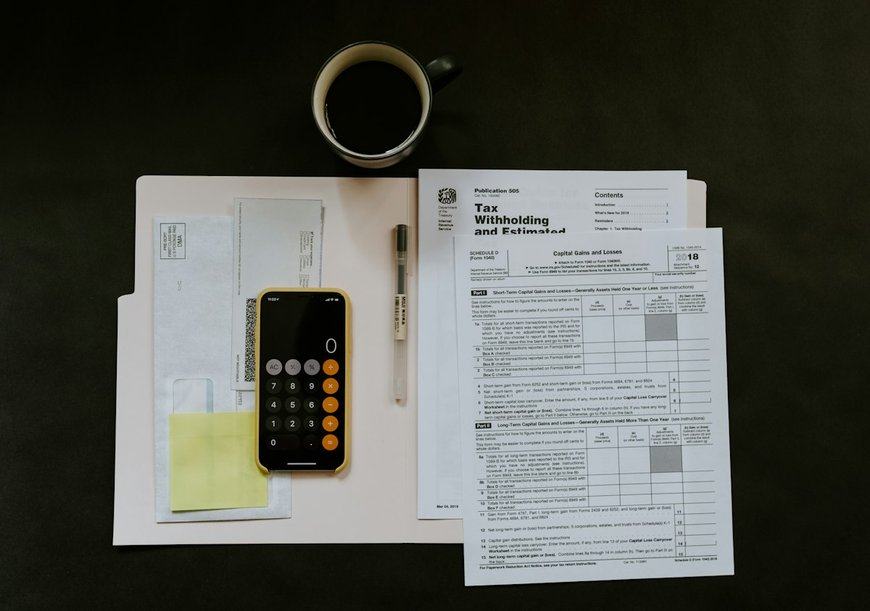
Leaving a traditional job to work for yourself is an exhilarating feeling. You send your first client invoice for $8,000, watch the full $8,000 clear in your checking account, and celebrate your new earning power. There is no boss deducting taxes from your check. You feel wealthy.
Then April arrives. You take your business spreadsheet to an accountant, and within ten minutes, you are handed a tax bill for $18,000 that you did not budget for. You sit in your car outside the CPA's office feeling like you have been kicked in the chest.
This is the harsh initiation into the world of self-employment tax. When you work as a W-2 employee, your employer quietly hides half of your payroll tax burden behind the scenes. The moment you become your own boss, Uncle Sam demands that you pay both halves yourself. Here is how self-employment tax actually works, how to calculate it, and how to avoid costly IRS penalties.
The Hidden Reality of FICA: The 15.3% Shock
Every working American must pay into Social Security and Medicare. These payroll taxes are governed by the Federal Insurance Contributions Act (FICA). The total mandatory tax rate is 15.3%, broken down into two components:
- Social Security (OASDI): 12.4% on net earnings up to the annual wage cap ($168,600 in 2024, adjusting annually for inflation).
- Medicare: 2.9% on all net earnings with no income ceiling. High earners pay an additional 0.9% Medicare surtax on earnings over $200,000 (single) or $250,000 (married).
When you are a regular W-2 corporate employee, you only see a 7.65% deduction on your paystub. Why? Because the law mandates that your employer pay the other 7.65% out of their own corporate pocket.
When you work as a freelancer, independent contractor (1099), or sole proprietor, you are both the employee and the employer. That means you are legally responsible for paying the entire 15.3% self-employment tax yourself. And remember: this 15.3% is in addition to your standard federal and state income taxes!
How Schedule SE Actually Calculates the Tax
The IRS does provide one small mathematical break when calculating self-employment tax on Schedule SE of Form 1040.
First, the IRS only applies the 15.3% tax to 92.35% of your net business profit (acknowledging that employers get to deduct their half of payroll taxes). Second, you are allowed to take an "above-the-line" income tax deduction for exactly half of the self-employment tax you paid, which lowers your adjusted gross income (AGI).
Net Earnings Subject to SE Tax = Net Business Profit × 0.9235
Self-Employment Tax = Net Subject Earnings × 15.3%
Let's run the real numbers. Suppose you operate a digital marketing consultancy as a single-member LLC. In 2024, you collect $110,000 in revenue and incur $20,000 in deductible business expenses (software, laptop, home office, travel). Your net profit on Schedule C is $90,000.
- Taxable SE Base: $90,000 × 0.9235 = $83,115
- Total Self-Employment Tax: $83,115 × 15.3% = $12,716
- Above-the-Line AGI Deduction: $12,716 / 2 = $6,358 deduction against your ordinary income taxes
On a $90,000 net profit, you owe $12,716 in self-employment tax alone before you pay a single dollar of federal or state income tax!
The Quarterly Estimated Tax Requirement
Many first-time entrepreneurs think they can simply save up their money and pay their entire tax bill once a year on April 15th. The IRS does not allow this.
The United States operates on a "pay-as-you-go" tax system. If you expect to owe more than $1,000 in federal taxes for the year, you are legally required to make quarterly estimated tax payments using IRS Form 1040-ES. The four deadlines occur throughout the year:
| Payment Period | Income Earned Between | Payment Due Date |
|---|---|---|
| Q1 Payment | January 1 - March 31 | April 15 |
| Q2 Payment | April 1 - May 31 | June 15 |
| Q3 Payment | June 1 - August 31 | September 15 |
| Q4 Payment | September 1 - December 31 | January 15 (of following year) |
If you fail to make these quarterly payments—or underpay significantly—the IRS will assess underpayment interest penalties when you file your annual return, even if you pay the full balance in April.
The Safe Harbor Rule: Protecting Yourself from Penalties
What if your freelance income swings wildly and you don't know how much you will earn by December? The IRS provides a legal safety shield called the Safe Harbor Rule.
You can avoid all underpayment penalties if your quarterly estimated tax payments equal at least one of these two benchmarks:
- 90% of your current year's total tax liability, OR
- 100% of your previous year's total tax liability (bumped to 110% if your prior year adjusted gross income was over $150,000).
The prior-year safe harbor is the easiest method. Look at line 24 of your prior year's Form 1040 (total tax). If your total tax last year was $16,000, simply divide that by four and pay $4,000 each quarter. Even if your business explodes and you make $300,000 this year, you will owe zero penalties in April as long as you satisfied the safe harbor threshold!
Real Case: How an Architect Fixed His Tax Nightmare
Julian was an architectural draftsman in Denver who went freelance in 2023. He kept all client deposits in his primary checking account and spent cash freely. By December, he had cleared $135,000 in gross fees with $15,000 in expenses ($120,000 profit). He had made zero quarterly tax payments.
In April 2024, his CPA calculated his total liability: $16,955 in self-employment tax, plus $14,200 in federal income tax, plus $4,800 in Colorado state tax. Total bill: $35,955. Adding insult to injury, the IRS tacked on an $850 underpayment penalty. Julian had only $9,000 left in his checking account. He had to enter an agonizing 36-month IRS installment agreement with interest.
To ensure this never happened again, we set up a dedicated "Tax Vault" business savings account. Julian established an automated banking rule: the moment a client invoice clears, exactly 30% of the funds are automatically transferred into the Tax Vault. On the 1st of April, June, September, and January, his CPA logs in, looks at cleared cash, and submits the quarterly payment through EFTPS.gov. Julian sleeps soundly knowing his taxes are paid in real time.
Three Golden Rules for Self-Employed Finances
- Never touch the tax percentage: Treat 25% to 30% of every incoming client check as money that belongs to the US Treasury. You are merely holding it temporarily.
- Track every legitimate business write-off: Every $100 you deduct in software, home office space, or equipment saves you approximately $30 to $40 in combined income and self-employment taxes.
- Evaluate an S-Corp election above $80,000 profit: If your net profit consistently clears $80,000, talk to your CPA about electing S-Corporation tax status to legally reduce your FICA burden.